Most homeowners only think about their roof when something goes wrong. By that point, water has usually already entered the building, and what could have been a minor repair has become a more significant and expensive problem.
A roof inspection is not just a reactive tool. Here is when you should be booking one.
After a Significant Storm
Melbourne gets damaging weather. Hailstorms, heavy rain events and strong winds can all cause roof damage that is not immediately visible from ground level. Cracked or displaced tiles, damaged flashings and blocked valleys may not produce an obvious interior leak straight away, but they will.
If your suburb has experienced a storm severe enough that neighbours are reporting damage, book an inspection. Most storm damage is covered under home insurance, but insurers require a damage report from a qualified tradesperson to process a claim. A licensed roof plumber can provide that report.
When Buying a Property
A standard building inspection covers a lot of ground but is not performed by a roof plumber and may not go onto the roof. The inspector may note visible concerns from ground level but will not assess the roof in the same detail as a specialist.
For older Melbourne homes, particularly those with tile roofs in the inner north, a dedicated roof inspection before exchange is worth the cost. The cost of an inspection is small compared to discovering the roof needs replacing after settlement.
Every 5 to 7 Years on an Older Home
Roofs on Melbourne homes built before the 1990s, particularly tile roofs, have components that degrade over time. Pointing and bedding on tiled roofs typically need attention every 15 to 20 years. Flashings around chimneys, skylights and walls can deteriorate faster. Timber fascia boards behind gutters can rot without being visible from the street.
Regular inspections on older homes catch these issues before they become structural problems or water ingress. Preventative work is almost always cheaper than reactive repair.
Before Selling Your Home
Buyers and their inspectors will look at the roof. A visible problem, or a problem that shows up in a building inspection report, gives buyers leverage to negotiate the price down. Getting an inspection before listing, and fixing identified issues, puts you in a stronger position and avoids surprises during the sale process.
If You Notice Staining on Ceilings or Walls
Interior water staining does not always mean the roof is leaking directly above the stain. Water can travel along rafters or battens before dropping. But staining is a clear indicator that water has entered somewhere. Do not wait to see if it gets worse. Book an inspection.
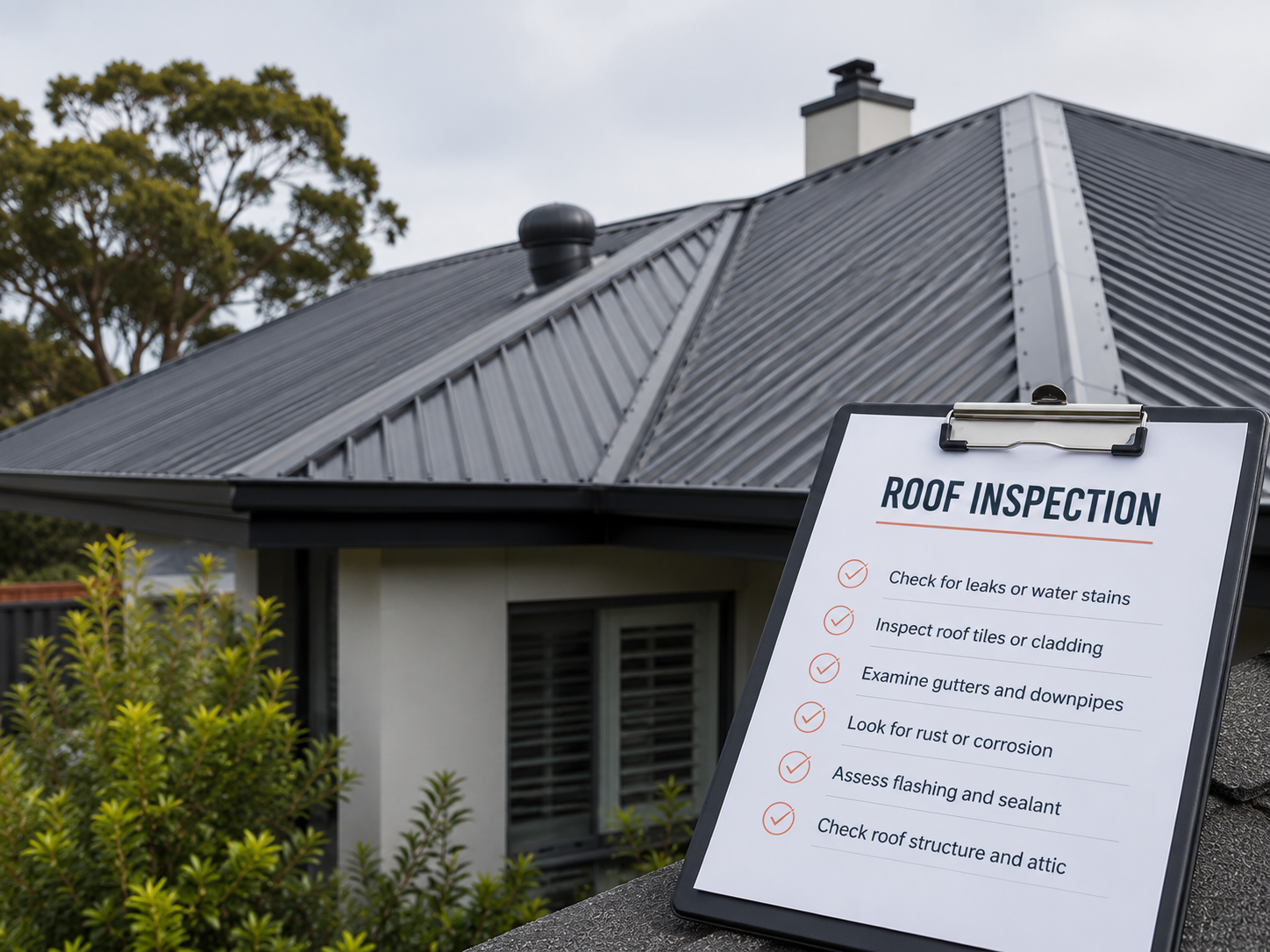
What a Roof Inspection Includes
- A proper inspection by a licensed roof plumber covers:
- Full roof surface assessment: tiles, metal sheets, or membrane depending on roof type
- Ridge capping, hip capping and valley condition
- All flashings: around chimneys, skylights, walls, pipes and vents
- Gutter and fascia condition
- Visible batten and rafter condition where accessible
Drainage and fall assessment for gutters and downpipes
At the end of the inspection, you should receive a written report with findings and recommended work, prioritised by urgency. This report can be used for insurance claims, property transactions or to schedule maintenance.